

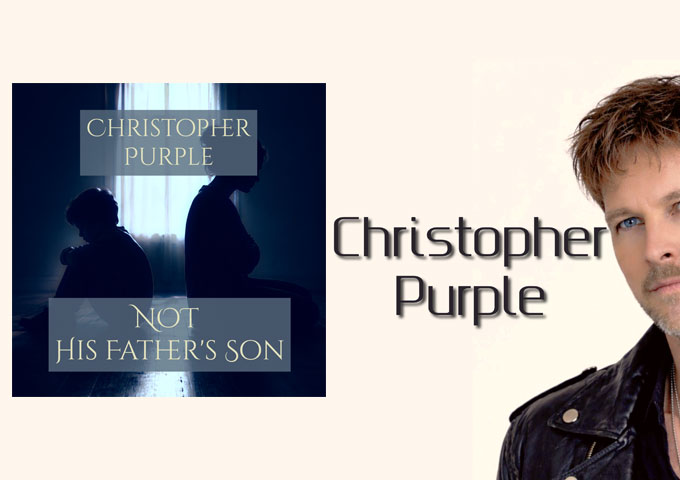
Christopher Purple explores what happens when resentment between parents becomes an undeserved burden for their child. “Not His Father’s Son” challenges the assumption that family history determines individual identity. Its lyrics reveal the emotional consequences of prolonged rejection, silence, and denied opportunities for reconciliation. A gradually expanding pop-rock arrangement gives the song both intimacy and dramatic intensity. The message is unmistakable: every individual deserves to be judged by their own actions.
Some of the most painful injustices happen within the very relationships that should offer unconditional love. Christopher Purple confronts one such tragedy in “Not His Father’s Son,” a powerful, narrative-driven pop-rock ballad released October 26, 2026. Written, produced, and performed entirely by Christopher Purple, the single is based on a true story, with the central character’s name changed to protect the innocent party. Behind its emotionally expansive arrangement lies a profoundly sad account of a blameless child rejected by his mother because of her hatred for his father. It is an unsettling subject, not simply because of the cruelty involved, but because it exposes how resentment between adults can become an inheritance imposed upon someone who has done nothing to deserve it.
At the heart of the composition is Johnny, a person whose identity is continually overshadowed by the reputation and history of his father. Rather than being judged according to his own decisions, character, or capacity for goodness, Johnny is made to answer for somebody else’s actions. Christopher Purple establishes this injustice through the recurring assertion that Johnny is not his father’s son. The phrase operates as both a declaration of individuality and an appeal for recognition. It asks listeners to distinguish between biological connection and personal identity, challenging the assumption that a child must inevitably reproduce the behavior, mistakes, or perceived shortcomings of a parent.
The opening establishes this distinction immediately, describing someone who is neither what others expected nor the person he might once have been. The suggestion of personal growth is particularly important. Johnny is not presented as an untouchable figure without imperfections, but as an individual who has changed and deserves to have that development acknowledged. The reference to his consistent willingness to do good reinforces the contrast between his actual character and the negative assumptions imposed upon him. Christopher Purple makes a compelling point here: when someone has already been assigned an identity by other people’s prejudices, even positive actions can become invisible.
The chorus provides the song’s emotional foundation, returning repeatedly to the insistence that Johnny should not be judged through his father’s legacy. Its repetition feels deliberate rather than merely melodic, reflecting the exhausting persistence of a prejudice that refuses to disappear. Each return strengthens the central argument, as though Christopher Purple is trying to make an unwilling listener finally understand something that should never have required explaining. The simplicity of the refrain gives its message considerable weight, allowing the emotional truth to emerge without unnecessary lyrical complexity.
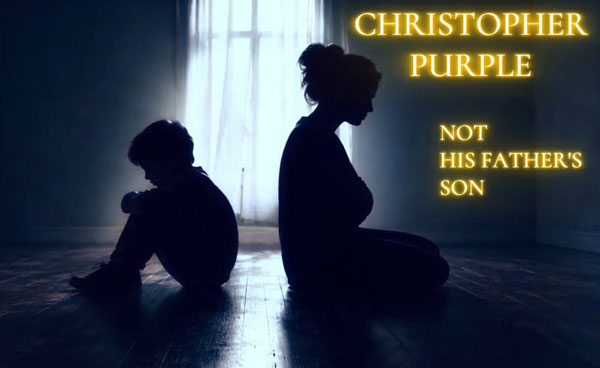
The verses deepen the tragedy by examining the consequences of being denied even the opportunity to prove oneself. Christopher Purple identifies the refusal to offer Johnny a chance as one of the most painful aspects of his experience. There is also an especially affecting contrast between the affection and romantic sensitivity attributed to him and the cold silence he receives in return. The absence of communication becomes its own form of rejection. Rather than confronting Johnny as an individual, the person withholding acceptance appears content to maintain an established judgment, leaving him without the reassurance or acknowledgment he desperately needs.
The reference to Johnny not filling his father’s shoes is particularly revealing. It exposes the absurdity of measuring a child against a parental figure when the entire point is that he should be allowed to establish his own identity. The song questions why anyone would expect him to occupy a position defined by another person’s actions, especially when those actions have already caused so much damage. Christopher Purple’s writing is effective because it approaches this injustice through straightforward, accessible language. The emotional force comes from the circumstances themselves, not from elaborate metaphors or exaggerated descriptions.
As the narrative progresses, the passing of days, months, and years makes the rejection even more devastating. Time should provide opportunities for understanding, reconciliation, and the discovery of who someone really is. Instead, Johnny remains trapped within the same judgment. The suggestion that offering him a hand would be met with complete devotion reveals how much potential for connection remains unexplored. His willingness to respond positively is there, but the opportunity is withheld. The resulting pain is not simply the disappointment of being misunderstood. It is the deeper anguish of being denied a relationship that should have been possible in the first place.
Musically, “Not His Father’s Son” gives this emotionally demanding narrative the space it needs to develop. Christopher Purple builds the arrangement around melancholic piano and acoustic guitar textures, gradually expanding the atmosphere through driving percussion and swelling string dynamics. The cinematic pop-rock production creates a sense of emotional progression without overwhelming the storytelling. Across its five-minute runtime, the instrumental arrangement rises and falls with the changing intensity of the narrative, balancing intimate passages with more expansive moments of release.

Christopher Purple’s vocal performance is central to the song’s impact. There is an appealing combination of vulnerability and grit in the delivery, allowing the verses to retain the intimacy of a personal account while giving the chorus a much more impassioned character. Rather than treating the subject as an abstract social issue, Christopher Purple communicates the frustration and sadness of someone witnessing an individual being repeatedly denied the acceptance he deserves. The growing intensity reinforces the sense of an appeal that has been made countless times without receiving an adequate response.
One of the composition’s most significant moments arrives when Christopher Purple acknowledges that Johnny is sometimes wrong. This admission prevents the song from becoming a simplistic defense of perfect innocence. Nobody is right all the time, and Johnny is not being presented as someone beyond criticism. Instead, the question becomes why his mistakes should carry such disproportionate consequences when everyone is capable of making them. The contrast between ordinary human imperfection and the extraordinary severity of his treatment exposes the double standard at the center of the story.
The subsequent reference to someone who has spent too long in darkness introduces a possibility of redemption. The movement toward light is not necessarily about erasing the past or pretending that difficult experiences never happened. It is about finally allowing Johnny to be seen without the distortions of inherited resentment. It also gives the song an important emotional dimension beyond sadness. Beneath the frustration is a belief that understanding remains possible, provided someone is willing to abandon their assumptions and recognize the person standing in front of them.
Ultimately, Christopher Purple’s “Not His Father’s Son” is a heartfelt appeal for individuality, fairness, and the unconditional acceptance every child should be able to expect. Its real-life foundation makes the subject particularly difficult to dismiss, while its accessible songwriting and emotionally expansive production ensure that the message resonates beyond the circumstances of Johnny’s story. This is a song about the damage caused when adult conflicts become a child’s burden, and about the terrible loneliness of having to prove that you are not responsible for someone else’s mistakes. Christopher Purple does not offer an easy resolution, but he leaves listeners with an essential question: how much unnecessary suffering could be prevented if people simply judged others by who they are rather than where they come from?
OFFICIAL LINKS: APPLE MUSIC – BANDCAMP – YOUTUBE – FACEBOOK – WEBSITE









Leave a Reply