

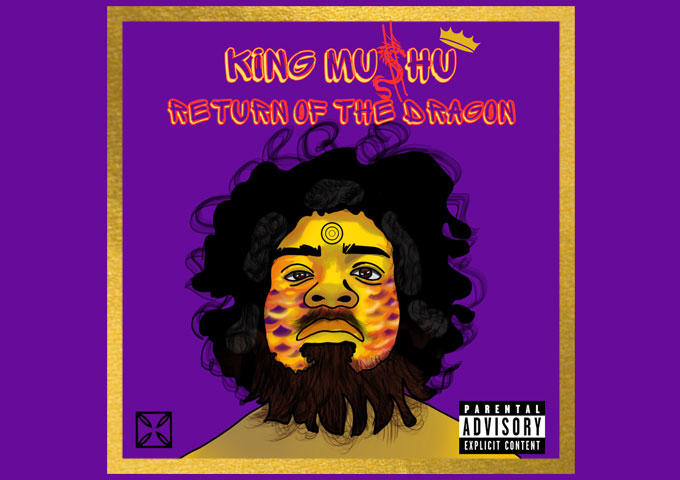
While the rest of the landscape chases moments, King Mushu builds meaning, and his new album is the most compelling evidence yet. Rooted in resilience, self-mastery, and spiritual purpose, this is the rare hip-hop project that rewards every single replay.
There is a certain kind of album that announces itself not through hype, but through weight. From the first seconds, something feels different about it, more considered, more alive, more rooted in genuine intention than in the mechanics of content creation. King Mushu‘s Return of the Dragon is that kind of album, and in a moment where independent hip-hop is both more accessible and more disposable than ever, its arrival feels like a necessary correction.
Released under Underground Paradise Recordz and Goddex Nation, the 15-track project from Baltimore County‘s own King Mushu, born Tony Anhtuan Mai, is the work of an artist who has spent years not just refining his craft but clarifying his purpose. Drawing on a personal history that bridges Vancouver roots, Black and Asian American heritage, Baltimore street reality, and a deeply held spiritual worldview, King Mushu has constructed something rarer than a good rap album. He has constructed a complete artistic statement.
“The Awakening” opens proceedings with a move that immediately signals the album’s ambitions. Rather than a conventional intro, King Mushu stitches together musical fragments layered beneath an iPhone alarm, pulling the listener into that fragile threshold between sleep and waking. When his voice enters, speaking on gratitude, purpose, and the texture of life itself, the effect is disarming in the best way. He identifies himself as a young king from Baltimore with a mission directed outward, toward the listener, toward the community, toward something larger than self-promotion. It is not an intro. It is a covenant.
That sense of conviction deepens on “Must Be Destiny”, where melodic trap production carries reflections on origins before the beat pivots hard into something heavier and more urgent. The shift is not a gimmick. It mirrors the internal dynamic King Mushu is describing: the tension between where you come from and the force it takes to move toward what you believe you were built for. “Mustard Seed” continues the inward journey with darker production and layered writing that balances bold self-belief against tender memories of family, showing how those early foundations shape not just character but consciousness.
The album’s emotional intelligence comes fully into view on “Reverse” and “Guardian Angel.” The former moves fluidly between party-ready energy and sober reflection on loss, holding both in the same breath through the organizing idea of perspective. The latter is one of the project’s most arresting moments: guitar-driven and unhurried, it finds King Mushu sitting with grief and refusing the easy comfort of closure, asking instead whether death is an ending or a transformation. It is the kind of track that stops a listener mid-stride.
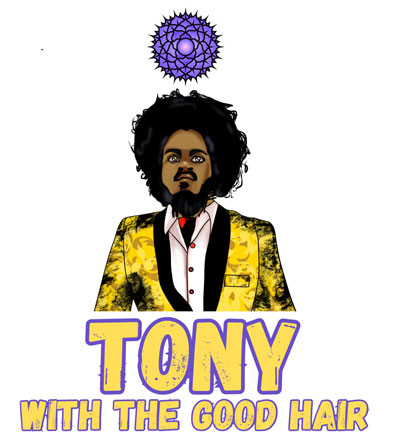
Then, with the timing of an artist who understands pacing, comes “Tony with the Good Hair” – playful, confident, and unambiguously fun. It lands without feeling out of place because King Mushu has already established enough depth that a moment of levity reads as dimension rather than distraction. This ability to range across emotional registers without losing the album’s internal logic is one of Return of the Dragon‘s defining strengths.
Faith and environment converge on “Messiah Complex,” which opens against the stark backdrop of Baltimore’s daily realities before moving into verse that draws a parallel between King Mushu‘s devotion to writing and the devotional force of something sacred. It is an audacious comparison handled with enough craft to earn it. “Hard Headed” explores relational dynamics through a cloud rap lens, while “Lockin In” functions as a brief but penetrating interlude, compressing the chaos of street life into something close to a quiet reckoning with loss.
“Donkey of the Day” strips the production back and lets directness do the heavy lifting, targeting betrayal and disloyalty with the kind of precision that only comes from lived experience. “Black God” follows with renewed aggressive energy, reconnecting personal power to spiritual identity in a way that feels earned rather than performative. “More Focused” answers critics and doubters not with resentment but with the quiet authority of someone whose discipline has become its own argument.
The conceptual high-water mark may come with “No Batman,” a track that maps Baltimore’s struggles onto the Gotham mythology with a dark production palette that makes the metaphor feel visceral rather than literary. It is not a complaint dressed in imagery. It is a meditation on what happens to a community when its potential heroes are consumed by the same environment they might otherwise transform. It aches with something real.
“Thank You” brings the album to a more intimate place, acknowledging the people whose belief and support made the journey possible. Its sincerity is unguarded and landing between the album’s more charged moments, it provides the kind of emotional resolution that reminds the listener this has been a personal story all along. “Spit Fire” then closes everything with kinetic energy and technical precision, a final flourish from an artist who clearly has no intention of coasting toward the finish line.
What emerges across all fifteen tracks is a portrait of an artist shaped equally by struggle and philosophy, by the block and by the bookshelf, by loss and by the kind of stubborn faith that refuses to let loss have the final word. King Mushu cites Jay-Z, Kendrick Lamar, André 3000, Nas, and Tupac Shakur among his formative influences, and while his sound is entirely his own, that lineage is audible in his commitment to lyricism as a vehicle for genuine meaning rather than mere performance.
Beyond the music, King Mushu operates as the founder and CEO of Underground Paradise Records, a platform built around community engagement, social impact, and economic empowerment. Feeding programs, outreach efforts, and initiatives addressing homelessness and substance abuse are part of the label’s ongoing work, a reminder that for King Mushu, the art and the activism are not separate projects but expressions of the same driving vision.
Return of the Dragon is his most fully realized work to date, following The Rise of King Mushu in 2019 and Dawn of the Dragon in 2023, and it marks the arrival of an artist who has done the patient work of growing into the scope of his own ambition. Available across Apple Music, Tidal, Amazon Music, Pandora, and iTunes, the album is finding its audience, and that audience is finding in it something increasingly hard to locate: hip-hop that demands your full attention and rewards it generously.
In a landscape that often mistakes noise for impact, King Mushu and Return of the Dragon make the case quietly and powerfully that independent hip-hop, at its best, is still one of the most potent forms of human storytelling available to us.
OFFICIAL LINKS: SPOTIFY – AMAZON – APPLE MUSIC – INSTAGRAM – MERCH STORE








Leave a Reply