

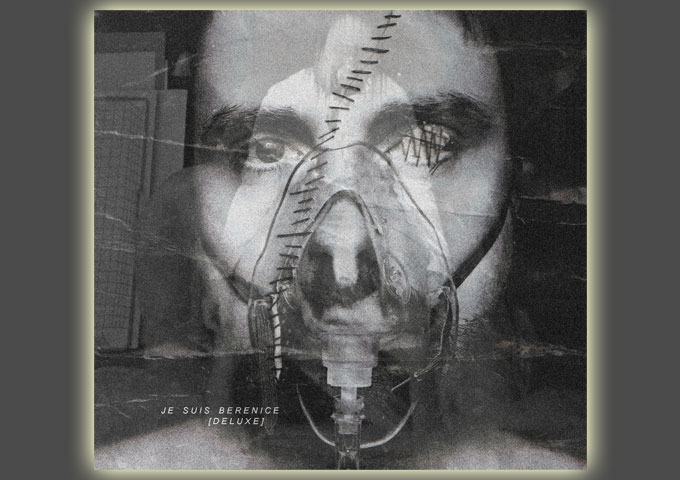
Unflinching in its exploration of human vulnerability, Jonas Kolb’s album moves through unsettling territories of despair, dissociation, and mortality. “Je suis Berenice (Deluxe)” combines dark ambient, industrial sound design, and black metal influences with a distinctly literary approach to composition. Its nine tracks develop a disturbing collection of images involving bodily disintegration, familial ghosts, and the loss of personal identity. The contrast between fragile melodic passages and oppressive electronic textures gives the record much of its emotional intensity. This is a bold artistic statement from a musician committed to exploring the boundaries between sound, literature, and psychological horror..
German artist, author, and musician Jonas Kolb has spent much of his creative life exploring the uncomfortable spaces where human vulnerability collides with psychological darkness. Born in 1993, he has developed an extensive multidisciplinary catalogue since 2010, encompassing literature, music, and visual art, both under his own name and through alternative identities including PUPPENGOTT, XCHNUM MIIIMIIIKRY, and THE BERENICE SOUND PROJECT. His creative vocabulary consistently gravitates toward loss, madness, isolation, and despair, subjects that become increasingly elaborate through his atmospheric compositions and unsettling visual imagination.
Released January 11, 2026, “Je suis Berenice (Deluxe)” represents a particularly uncompromising expression of this vision. Blending dark ambient, industrial experimentation, Gothic atmosphere, spoken-word performance, and elements of black metal, the nine-track album operates less like a conventional collection of songs and more like an immersive psychological environment. Its sound is deliberately uncomfortable, frequently disorienting, and rich in disturbing detail. Rather than relying on predictable musical structures or accessible melodic resolutions, Kolb assembles sonic fragments into compositions that seem to emerge from somewhere between a fever dream and an excavation of buried memories.
The album’s literary inspiration provides an especially fascinating foundation. Its title directly evokes Edgar Allan Poe’s 1835 Gothic horror story “Berenice,” a disturbing examination of obsession, physical deterioration, and the grotesque relationship between beauty and mortality. This literary connection becomes an important interpretive key to the album, although Kolb develops its imagery into something distinctly personal. The human body becomes an unsettling landscape of psychological conflict, repeatedly transformed through references to mechanical puppetry, bodily disfigurement, decay, and invasive memories. Flesh, bones, teeth, and internal organs are not simply physical details but symbolic extensions of emotional suffering.
The recurring imagery of zippers sewn into flesh, wooden joints, grinding bones, and nails climbing through the throat establishes an almost surrealist horror aesthetic. Yet the grotesque imagery is not employed merely for shock value. It communicates the experience of a fractured consciousness struggling to comprehend its own suffering. Equally significant is the recurring songbird, or Singvogel, which challenges the traditional association between birdsong and freedom. Here, the bird seems imprisoned within a deteriorating body, its voice carrying an endless expression of sorrow. It becomes a particularly affecting metaphor for an inner self that continues to communicate even when the possibility of liberation appears increasingly distant.
This relationship between physical imagery and psychological experience becomes central to the album’s exploration of generational trauma and familial inheritance. “Mutters fahle Bauchrede” and “Mama blutet” confront the lingering presence of the maternal figure, transforming childhood memories into something that remains physically and emotionally embedded within the narrator. The past is not presented as something safely contained in memory. Instead, it resurfaces through disturbing bodily metaphors, suppressed anger, guilt, and grief.
The concept of Bauchrede, or ventriloquism, offers another particularly intriguing dimension. The stomach becomes a symbolic instrument through which suppressed experiences find a voice when the conscious mind cannot articulate them. It suggests a psychological division in which the body assumes the burden of expressing what the individual cannot confront directly. Similarly, “Puppengott” develops the image of a mechanically controlled puppet, its wooden and metallic construction representing a profound detachment from personal identity. The puppet becomes an unsettling representation of powerlessness, suggesting an existence in which movement, agency, and even the experience of suffering seem controlled by something beyond the self.
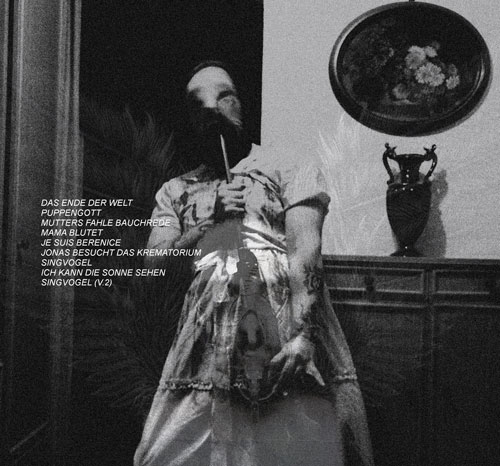
Musically, the album’s nine compositions provide distinct environments for these ideas to develop. “Das Ende der Welt” establishes the atmosphere through sparse ambient textures, chilling synthesizers, shimmering guitar motifs, and a deliberately restrained cinematic progression. Its winter imagery, fresh snow, and fading emotional warmth introduce the album’s preoccupation with endings, making the opening composition feel like an apocalyptic landscape viewed from an intensely intimate perspective.
“Puppengott” subsequently introduces fractured industrial rhythms, metallic explosive percussion, and erratic electronic textures that evoke the mechanical instability of its central imagery. Its unsettling sound design reinforces the impression of a consciousness caught inside an oppressive structure. The atmosphere becomes more intimate and psychologically claustrophobic with “Mutters fahle Bauchrede,” where muddy riffing guitars, distorted percussion, and intimate storytelling vocals create a disturbing sense of proximity. The guitar contributions by Gab (Gabriele Pesacane) provide a visceral layer to this unsettling composition.
“Mama blutet” continues the exploration of familial wounds through forceful rhythmic elements and aggressive vocal textures. Its oppressive guitar driven atmosphere reinforces the sense of inherited suffering, making the composition an especially harrowing expression of the album’s psychological concerns.
The title track, “Je suis Berenice,” introduces a more overtly thrashing musical language, combining desolate imagery with cleaving instrumentation, and deep spoken-word delivery which switch to screaming aggression. Featuring vocals by Berenice Leitner, it stands as one of the album’s central emotional statements. The declaration of identification with Berenice suggests a dissolution of individual identity, as the narrator increasingly merges with the doomed literary archetype that inspired the record. It is a particularly striking conceptual moment, bringing together the album’s Gothic literary foundations and its deeply personal exploration of psychological fragmentation.
Mortality becomes even more tangible in “Jonas besucht das Krematorium.” Cold metallic noises, ambient drones, and spoken verbal exchanges establish the emptiness of a crematorium, while the lyrical imagery confronts death through its physical processes rather than romanticizing it. The transformation of bone and ash into diamonds introduces an unexpected symbolic possibility: something permanent emerging from material destruction. The presence of deceased parental figures further connects this meditation on mortality with the album’s recurring concerns about inheritance, memory, and unresolved grief.
The avian motif returns in “Singvogel,” where ethereal ringing synthesizers and bursts of spoken word narration create a striking contrast between fragile melodic beauty and psychological disturbance. The composition develops powerful mood-inducing imagery. It is among the album’s most evocative and prolonged conceptual moments, capturing the tension between the persistence of an inner voice and the suffocating circumstances surrounding it.
“Ich kann die Sonne sehen” introduces melodic cinematic synthesizer loops and undertones of a hypnotic rhythmic urgency, creating a striking contrast with the preceding compositions. Its references to an imagined painless escape are deliberately unsettling, reflecting the album’s engagement with severe despair rather than offering a straightforward vision of redemption. The drum performance by Lennart Grünewald adds another dimension to its rhythmic construction, reinforcing the composition’s increasingly imperative and hypnotic character.
Finally, “Singvogel (V.2)” revisits the earlier composition through a re-orchestrated arrangement, emphasizing melodic synthesizer lines and heavier atmospheric drones. Rather than simply repeating an established idea, this second version deepens the album’s sense of psychological captivity and unresolved emotional tension, providing a fitting conclusion to its disturbing sonic narrative.
What makes “Je suis Berenice (Deluxe)” particularly compelling is the way its literary, musical, and visual dimensions reinforce one another. The nine compositions share a coherent aesthetic in which industrial textures, Gothic symbolism, existential poetry, and experimental sound design become different expressions of the same fractured emotional universe. Jonas Kolb approaches composition as a form of artistic excavation, uncovering uncomfortable material without attempting to disguise its ugliness or provide convenient answers.
All songs, lyrics, and artwork are by Jonas Kolb, whose control over the album’s overall creative direction gives the project a remarkably unified identity. The selected instrumental and vocal contributions enrich its musical and interpretive dimensions while preserving the distinctive character of his artistic vision.
“Je suis Berenice (Deluxe)” is an uncompromising work of dark experimental art that demands engagement rather than passive consumption. Its grotesque imagery, oppressive soundscapes, and deeply personal examination of psychological suffering may challenge listeners accustomed to conventional musical narratives, but that discomfort is fundamental to its artistic identity. Jonas Kolb constructs an environment in which literature becomes sound, memories become physical manifestations, and mortality becomes an unavoidable presence. It is a disturbing, carefully assembled, and profoundly creative statement from an artist whose imagination continues to explore the darkest recesses of human experience.
OFFICIAL LINKS: https://linktr.ee/jonaskolb












Leave a Reply